Most modern split air conditioners are heat pumps and can heat as well as cool. Switch to heat mode, set about 20–23°C (EAC suggests 22–23°C; the Cyprus Energy Agency suggests about 20°C for the home), point the flaps down and allow a few minutes. Short pauses with no warm air are usually a normal defrost cycle. Clean filters and a pre-winter service help.
Key takeaways
- Heat mode on a split unit is a heat pump; it’s built for this, not a workaround.
- EAC advises 22–23°C in winter; each degree higher uses about 7% more electricity (EAC).
- Cold air at start-up and short pauses are normal (pre-heat and defrost); a unit that never warms needs a technician.
- Filters you can clean yourself; refrigerant work is for certified technicians only (EU F-gas rules).
- Warm air rises: flaps down, doors closed, curtains drawn at night.
Can you heat a Cyprus home with air conditioning?
Yes. Split units are the usual way to cool a home here, and most can heat as well. With winters that are mild on the coast and short almost everywhere, many homes use them as their main heating.
Split units are heat pumps
Most modern split air conditioners are heat pumps. In summer they move heat out of the room; in heat mode the same circuit runs the other way and moves heat from the outside air into the room. Because the unit moves heat rather than making it, it can deliver more warmth than the electricity it uses, which is why heat mode is a normal setting, not a workaround.
When it works well, and when it struggles
AC heating works well in a room of normal size with the doors closed and reasonable insulation. It struggles in large open-plan spaces, in rooms with big single-glazed windows or draughty frames, and on the coldest mornings, when the outdoor unit has to work harder and defrosts more often.
The right settings for winter
A few settings make most of the difference to comfort and to your bill.
Temperature: about 20–23°C
The Electricity Authority of Cyprus (EAC) advises setting the AC to 22–23°C in winter, and says that for every degree above this you will use 7% more electricity. The Cyprus Energy Agency’s household guide suggests about 20°C for the home and estimates about 5% saved for every 1°C lower. Start in that range and go up only if you need to.
Fan, flaps and airflow
Warm air rises, so point the flaps down towards the floor. Leave the fan on auto, so the unit can run fast while it warms the room and slow down once it is warm. Keep furniture and curtains from blocking the indoor unit.
Timers and sleep modes
Rather than running the unit all night, use the timer to start it shortly before you get up or come home. Many units have a sleep mode that eases the set temperature during the night; your manual explains what yours does.
Finding heat mode on the remote
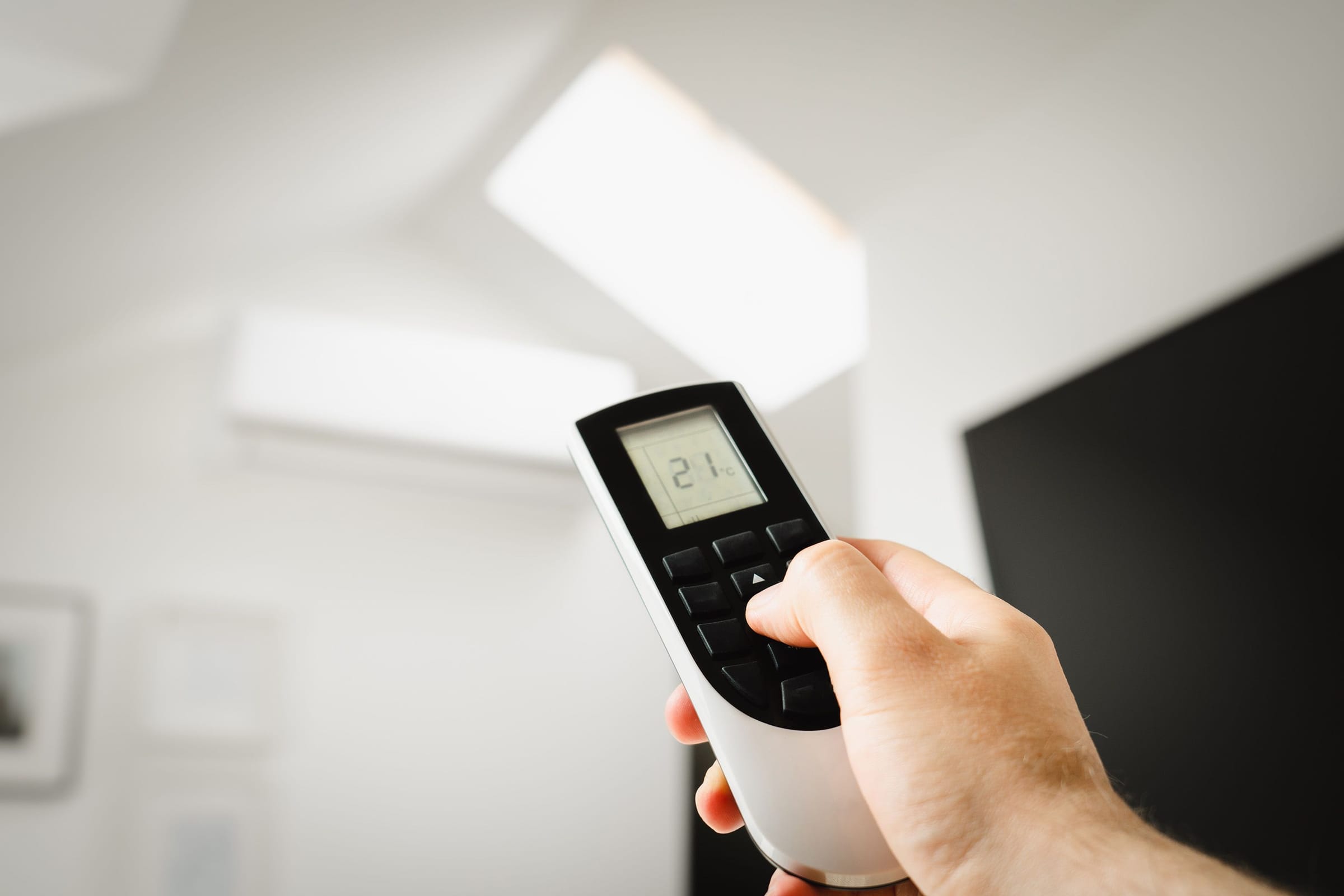
Heat mode is usually marked with a sun symbol, and cooling with a snowflake. If the remote has a MODE button, press it until the sun shows. Some remotes also show “heat” as text. If you can’t find it, check the manual for your model.
Why your AC blows cold air at first, or stops for a few minutes
Most “not heating” worries in the first cold week turn out to be normal behaviour.
The warm-start delay
When you switch on heat mode, the indoor fan often waits a few minutes until the coil is warm, so it doesn’t blow cold air at you. You may hear the outdoor unit start before anything happens indoors. Give it a few minutes before deciding something is wrong.
The defrost cycle
On cold, damp days, ice builds up on the outdoor unit. The unit then pauses heating for a few minutes to melt it: the indoor fan slows or stops, the outdoor fan may stop, and you may see steam rising from the outdoor unit. This is normal, and heating starts again on its own.
Water from the outdoor unit in winter
The melted ice has to go somewhere, so an outdoor unit dripping in winter is usually normal. Make sure the water drains away from walkways, stairs and the balcony below. If water comes out of the indoor unit, that is not normal: switch it off and call a technician.
City by city: what changes in winter
The same unit behaves a little differently depending on where you live.
Inland Nicosia usually has colder winter nights than the coastal cities, so units work harder on cold mornings and defrost more often. Use the timer to start heating before you get up. AC technicians in Nicosia.
Larnaca is coastal and milder, but humid, salty air is hard on outdoor units. Rinse leaves and dust off the outdoor unit’s fins with the power off, and have corrosion checked at the service. AC technicians in Larnaca.
Paphos has a mild coast and many holiday homes that are switched on after months idle. Clean the filters before the first run, and run heat mode for a while to check it works before guests arrive. AC technicians in Paphos.
Limassol is also mild, with many apartment blocks where outdoor units sit on balconies and roofs. Check where the defrost water drains, and keep noise in mind if you run the unit early or late. AC technicians in Limassol.
Make the heat go further
The AC can only keep in the heat the room can hold.
Insulation and draughts
The EAC says making sure doors, windows, walls and ceilings are properly insulated can save up to 40% of the electricity you would otherwise use. Even small steps help: close doors to rooms you aren’t heating, draw the curtains at night and seal obvious draughts.
Windows and condensation
Aluminium frames and single glazing get cold, and warm room air condenses on them. Wipe the glass in the morning and air the room for a few minutes each day.
Humidity and damp
AC heating dries the air, which can feel uncomfortable, but it is not a fix for a damp home. Keep ventilating, and see our mould and damp guide if patches appear.
Before winter: a 15-minute check you can do
Before the first cold week, give each unit a quick check:
Switch off the power
Turn the unit off with the remote, then switch it off at the breaker.
Wash the filters
Lift the front cover, slide out the mesh filters, rinse them in lukewarm water and let them dry in the shade before you put them back.
Clear the outdoor unit
Remove leaves, bags and anything stored against it, so air can flow freely.
Test heat mode
Switch the power back on and run heat mode for about 20 minutes. The air should turn warm after the first few minutes.
Note anything odd
Write down any smell, noise or error code, so you can tell a technician exactly what happened.
- Filters washed and dried
- Outdoor unit clear of leaves and clutter
- Defrost water drains away from paths
- Heat mode tested for 20 minutes
- Timer set for mornings
- Error codes noted
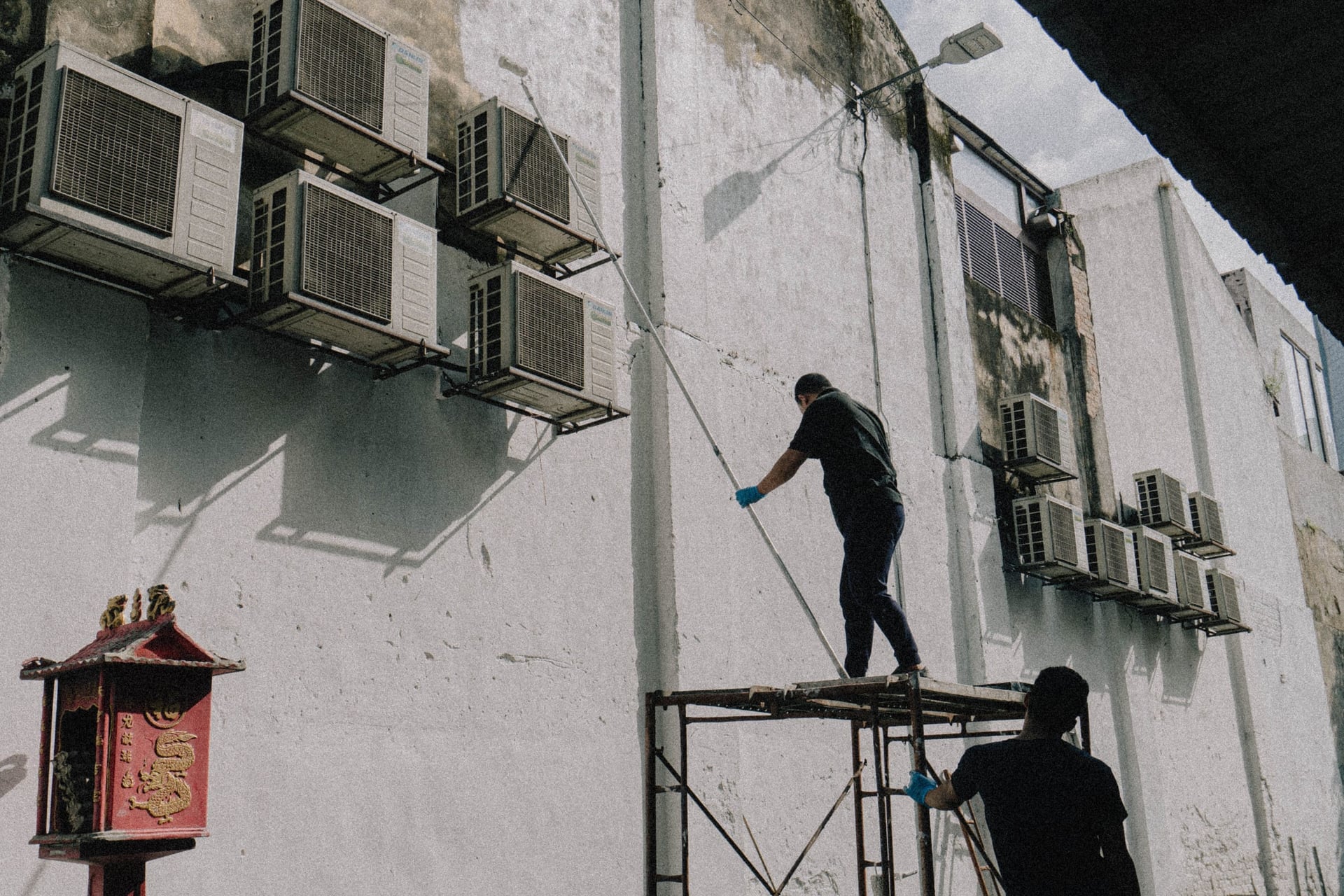
When to call an AC technician
Call a technician if:
- The air never turns warm after 15–20 minutes in heat mode.
- Ice on the outdoor unit doesn’t clear after a defrost.
- There is a burning smell, or the unit shows an error code.
- Water drips from the indoor unit while it is heating.
- The unit trips the breaker: call a licensed electrician (registered with the Electrical and Mechanical Services) to check the circuit.
Any work on the refrigerant circuit, such as adding or recovering refrigerant gas, fixing a leak, or installing or removing a unit, must be done by a technician certified under EU F-gas rules (Regulation (EU) 2024/573). In Cyprus, certificates are issued by the Department of Environment.
The EAC says that having air conditioning and heating units serviced regularly can cut your electricity use by as much as 30%. Many technicians advise a check before winter if you heat with your AC; our AC servicing guide explains what a service covers.
Describe the job
A clear request helps a technician judge the job before visiting. Include:
- How many units, and in which rooms.
- Their age and brand, if you know them.
- What happens: cold air, a noise, a smell or an error code.
- Which floor you are on, and how the outdoor unit can be reached.
- Your town or village.
Posting a job on Ergo is free. Ergo is new, so we may not have a pro for your trade and area yet. If we do, we send your request to independent local pros whose trade and city match; they can contact you, and you agree the price and the work with them directly. If we don’t, we’ll tell you and won’t pass your request to anyone.
Need someone to take a look?
Sent to local pros whose trade and city match. No match yet? We'll tell you.
AC heating and other heaters you see in Cyprus homes
Most homes mix more than one kind of heating. What suits a room depends on its size, its insulation, how long you heat it and safety:
- Oil-filled radiators: quiet and steady for a small room over a long spell, but slow to warm up.
- Fan heaters: quick for a short time in a small space; keep them clear of curtains and bedding.
- Gas heaters: never use them in a closed room without ventilation, and follow the maker’s safety instructions.
- Fireplaces and wood stoves: have the chimney swept, and don’t leave a fire unattended.
- Central heating with a heat pump: heats the whole home through radiators or underfloor pipes; a bigger project to plan with an installer.
Questions people ask
Is it cheaper to heat with an air conditioner or an electric heater?
A split AC in heat mode is a heat pump: it moves heat from outside rather than making it, so it can give more warmth than the electricity it uses. A plain electric heater turns electricity into the same amount of heat. Your actual running costs depend on the room, the insulation and how long you heat it.
What temperature should I set my AC to in winter?
About 20–23°C. The EAC suggests 22–23°C and says each degree above that uses 7% more electricity; the Cyprus Energy Agency suggests about 20°C for the home.
Why does my AC blow cold air on heat mode?
For the first few minutes the indoor fan waits until the coil is warm. If the air is still cold after 15–20 minutes, check that the remote shows heat mode (the sun symbol) and that the filters are clean, then call a technician.
Why does my AC stop heating for a few minutes?
It is usually defrosting. On cold, damp days ice forms on the outdoor unit, and the unit pauses heating to melt it. You may see steam from the outdoor unit. Heating restarts on its own.
Why is water coming out of the outdoor unit in winter?
That is the melted ice from the defrost cycle, and it is normal. Make sure it drains away from paths and the balcony below. Water from the indoor unit in heat mode is not normal; call a technician.
Is it safe to leave the AC on heat overnight?
You can, but you don’t need to run it all night. Use the timer to warm the room before you go to bed and before you get up, or use the sleep mode if your unit has one.
Does AC heating dry the air?
Yes, warming the air lowers its relative humidity, so a heated room can feel dry. It is not a fix for damp: keep airing the home every day.
How often should I service my AC if I use it for heating?
The EAC says regular servicing can cut your electricity use by as much as 30%. Many technicians advise a check before winter if you heat with your AC, on top of cleaning the filters yourself.
Sources
- Electricity Authority of Cyprus: saving tips for the home (eac.com.cy)
- Cyprus Energy Agency: household energy guide 2025 (Greek, PDF, cea.org.cy)
- Regulation (EU) 2024/573 on fluorinated greenhouse gases (EUR-Lex)
- Department of Environment: fluorinated greenhouse gases and technician certification (moa.gov.cy)
Service air conditioners for a living? Create a free profile; we review each sign-up.
Join as a proErgo introduces you to independent local professionals. You agree the price and pay them directly; we do not carry out or manage the work. This guide is general information, not medical or legal advice.