A wooden door that sticks in winter has usually absorbed moisture or dropped on loose hinges. Tighten the hinge screws first and find where it rubs. Don’t plane it while it is swollen, or it may gap in summer. For aluminium sliding doors, clean the track; worn or misaligned rollers need a fitter.
Key takeaways
- Find the rub point first: slide a sheet of paper round the closed door, or look for worn paint on the frame.
- Sticking at the top corner on the latch side usually means a loose top hinge, so check those screws before anything else.
- Swollen wood: dry the room out and wait, then trim only what still rubs and seal the bare edges.
- Sliders: keep the track free of dirt, and clear the drainage holes so rainwater doesn’t sit in it.
- A door that won’t latch or lock is a security problem. Get it fixed before you travel.
Where is it sticking?
Before you adjust anything, work out exactly where the door catches. Open and close it slowly and watch the edges. Rubbed or shiny paint on the door or the frame shows the spot.
Then look at the gap between the door and the frame when it is closed. This Old House notes that an uneven gap may mean the hinges are loose or out of alignment, while a door that is tight all round has more likely swollen.
- Top corner on the handle side: the door has dropped, usually from a loose top hinge.
- Along the whole latch edge or the bottom: the wood has probably taken up moisture.
- It closes but won’t latch: the latch and the strike plate on the frame no longer line up.
- Paper test: close the door on a sheet of paper at several points. Where the paper won’t slide, it is touching.
Wooden doors
Most wooden door problems in the damp months come down to the hinges, the wood itself or the latch.
Loose or sagging hinges
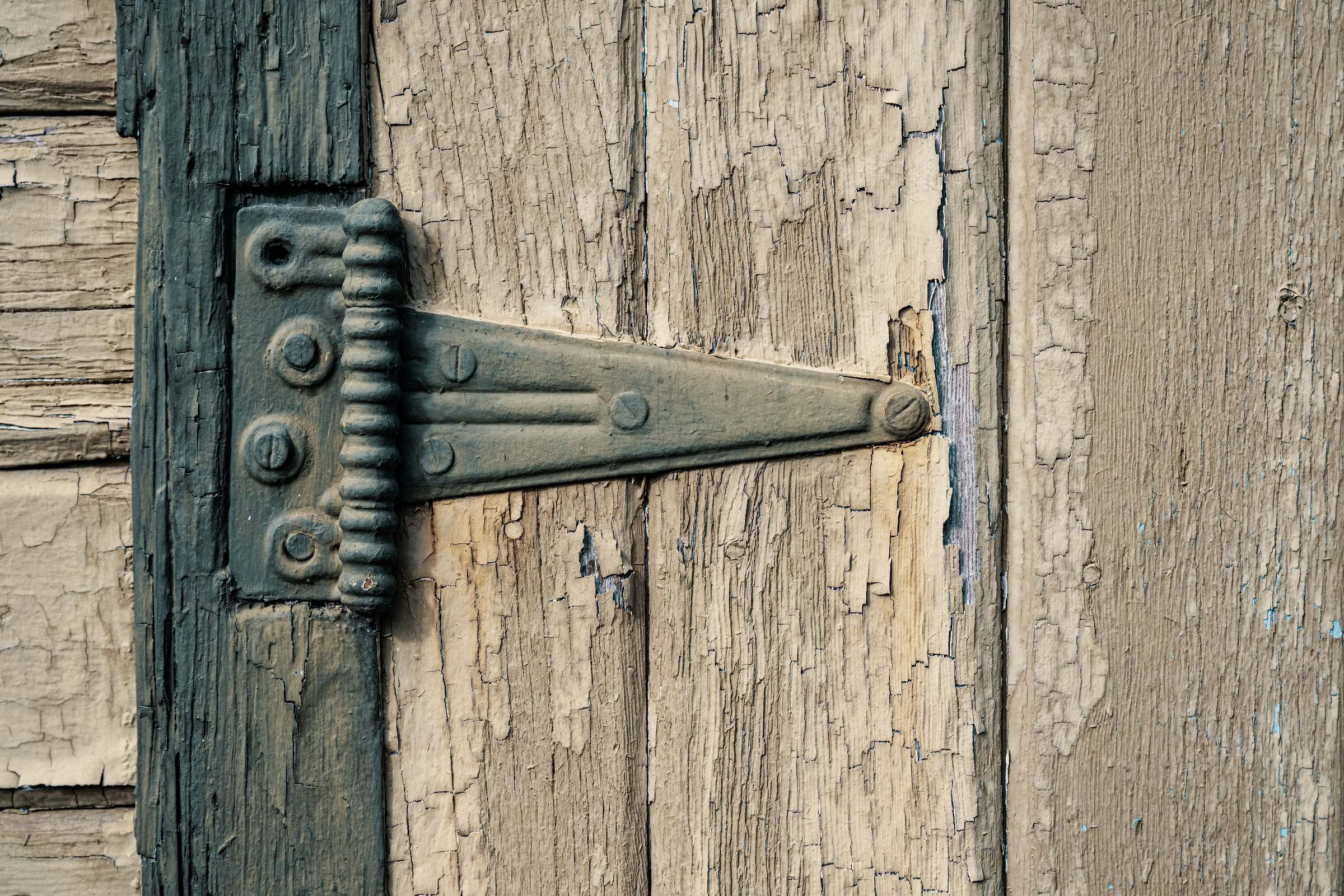
This Old House notes that heavy wooden doors put stress on the top hinge, which over time can strip the screw holes. Tighten every hinge screw with a hand screwdriver, not a drill, so you don’t strip them. If a screw just spins, the hole needs filling and re-drilling, or a longer screw that reaches into the solid frame behind. If the frame itself has moved or split, that is a job for a carpenter.
Swelling from damp
Wood takes up moisture from the air, so in the wet months a door can swell until it binds in its frame. Unsealed edges, especially the top and bottom that nobody paints, let moisture in fastest. Air the room on dry days and run a dehumidifier or the AC’s dry mode if the house is damp. Damp walls or mould nearby point to a moisture problem in the room, not just the door: our mould and damp guide covers the causes.
Planing and sealing: when and why
If the door still rubs once the room has dried out, it may need trimming. Take off as little as possible: wood shrinks again as it dries, so a door cut hard in midwinter can leave a gap in summer. Afterwards, prime and paint or seal the bare wood straight away, including the top and bottom edges. This Old House says that slows moisture getting back in; left bare, the door can swell again. Taking a door off its hinges to plane it is a carpenter’s job if you have no plane or no help to lift it.
Latch and strike plate misaligned
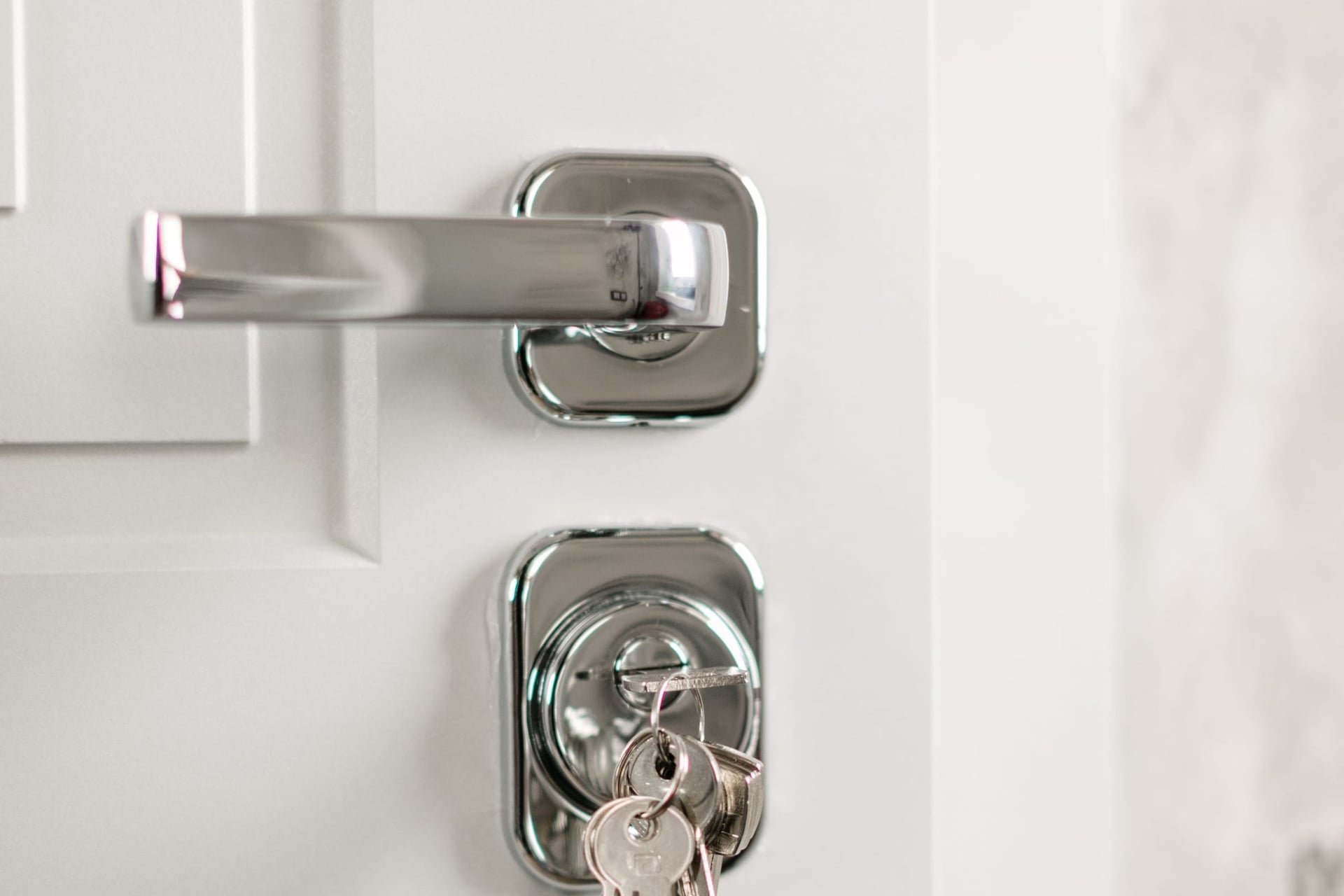
When a door has dropped or swollen slightly, the latch can miss the hole in the strike plate. Tighten the strike plate screws first. Filing the opening a little or moving the plate is a small job for a handyman or carpenter. If the lock itself is stiff, the key turns badly or the door won’t lock at all, call a locksmith; our locksmith guide explains what to ask before they come.
Aluminium sliding and balcony doors
Aluminium doesn’t swell, so a slider that grinds or jumps in winter usually has a problem in the track or the rollers underneath the panel.
Track cleaning and drainage holes
Dust, sand and leaves build up in the bottom track over the summer. Vacuum the track on both sides of the panel and wipe it with mild soap and water. The frame also has small drainage holes, often on the outer edge of the sill. The Lincoln patio door care guide says to keep the sill track free of dirt and debris and to keep these weep holes clear. Our first rains checklist includes them along with the window seals.
Rollers: adjustment or replacement
Many sliding panels have adjustment screws at the lower ends that raise or lower the rollers. A JELD-WEN patio door guide warns that setting the door too high may let water and air in, and too low makes it drag. Models differ, so if you don’t know yours, or the rollers are worn, cracked or seized, ask an aluminium windows and doors fitter. Heavy glass panels are not something to lift out on your own.
Locks and handles on sliders
If the panel slides but the handle won’t engage, the lock or keeper may have shifted as the panel dropped. A fitter can realign it; a locksmith can replace a broken lock cylinder.
Front and exterior doors
Outside doors take the rain directly, so the bottom edge and the threshold need the most care. Check that the paint or varnish on the bottom edge is intact and that the drip strip along the bottom, if there is one, is still fixed.
If water comes in under the door after heavy rain, the threshold seal, the slope of the step or a blocked drain outside may be to blame. Clearing the drains and gutters near the entrance is part of our first rains checklist.
Who to call
Which trade fits depends on the door and on what has failed:
| Problem | Who usually fixes it |
|---|---|
| Wooden door swollen, needs trimming and sealing | Carpenter |
| Door frame moved, split or rotten | Carpenter |
| Aluminium slider grinding, rollers worn, panel out of line | Aluminium windows and doors fitter |
| Lock stiff, key won’t turn, door won’t lock | Locksmith |
| Loose hinge screws, strike plate to adjust | Handyman |
For wood, find a carpenter or a handyman.
For sliders and locks, see aluminium windows and doors or a locksmith.
City notes
The fixes are the same across Cyprus. What changes is how damp your home gets and how often it is lived in.
- Larnaca: a holiday flat or second home that stays shut all winter gets no airing, so open the doors and windows on each visit. Carpenters in Larnaca.
- Limassol: if a balcony slider faces the weather, clear its track and drainage holes before the rains as well as after them. Carpenters in Limassol.
- Nicosia: inland Nicosia usually has colder winter nights than the coastal cities, so check doors in unheated rooms there first. Carpenters in Nicosia.
- Paphos: for village houses with old timber doors, check the bottom edges and thresholds once the first storms have passed. Carpenters in Paphos.
Describe the job
A clear description lets a carpenter or fitter judge the job before they visit. Include:
- Your town or village and area.
- Door type: wooden interior, wooden exterior, aluminium slider or PVC.
- Where it sticks, and since when.
- Whether it still closes, latches and locks.
- Photos of the hinges, the gap round the door and, for sliders, the track.
Posting a job on Ergo is free. Ergo is new, so we may not have a pro for your trade and area yet. If we do, we send your request to independent local pros whose trade and city match; they can contact you, and you agree the price and the work with them directly. If we don’t, we’ll tell you and won’t pass your request to anyone.
Need someone to take a look?
Sent to local pros whose trade and city match. No match yet? We'll tell you.
Checklist
Work through these before calling anyone:
- Rub point found (paper test or worn paint)
- All hinge screws tightened by hand
- Room aired and dried for a few dry days
- Bare top and bottom edges sealed after any trimming
- Strike plate screws tight and latch lined up
- Slider track vacuumed and wiped
- Drainage holes in the slider frame clear
- Lock and key tested before you travel
Questions people ask
Why does my door stick in winter but not in summer?
Wood takes up moisture from damp air and swells, then shrinks again in dry weather. A wooden door that binds only in the wet months has usually swollen, especially if its top and bottom edges were never sealed.
Will a swollen door go back to normal?
Often, once the wood dries out. Air the room, bring the humidity down, and wait before trimming anything. If it still rubs after a dry spell, it may need a light trim and sealing.
How do I fix a door sticking at the top corner?
That usually means the door has dropped on a loose top hinge. Tighten the screws on the frame side; if a hole is stripped, it needs filling or a longer screw into the solid frame. A carpenter can sort it if the frame itself has moved.
Should I plane a swollen door?
Not while it is swollen. Trim it in the middle of winter and you may end up with a gap in summer. Let it dry first, take off only what still rubs, and seal the cut edge straight away.
Why is my sliding door hard to open when it’s cold?
Aluminium doesn’t swell, so look at the track and rollers: grit, leaves or standing water in the track, or rollers that are worn or set too low, make a panel drag.
Who fixes aluminium sliding doors?
An aluminium windows and doors fitter, for rollers, alignment and seals. If only the lock has failed, that part is for a locksmith.
My door won’t latch: is it the lock or the door?
If the latch moves freely with the door open but misses the strike plate when closed, the door or plate has shifted. If the handle or key is stiff even with the door open, the lock itself needs a locksmith.
Sources
- This Old House: How to fix a door that sticks (thisoldhouse.com)
- This Old House: How to repair a stripped screw hole (thisoldhouse.com)
- This Old House: How to refinish a door (thisoldhouse.com)
- Better Homes & Gardens: How to fix a sticking door (bhg.com)
- Lincoln Windows: patio door care and maintenance manual (lincolnwindows.com)
- JELD-WEN: sliding patio door installation and adjustment instructions (PDF, lowes.com)
- Cyprus Department of Meteorology: The climate of Cyprus (archived copy, web.archive.org)
Work as a carpenter or door fitter? Create a free profile; we review each sign-up.
Join as a proErgo introduces you to independent local professionals. You agree the price and pay them directly; we do not carry out or manage the work. This guide is general information, not medical or legal advice.