If you hear scratching in the roof or find droppings, act early. Store food in sealed tubs, keep bins closed and clear clutter outside. Seal gaps around pipes, vents and doors. Don’t scatter loose poison where children or pets go. For an active problem, a pest control pro can find entry points and set tamper-resistant bait stations.
Key takeaways
- Signs: droppings, gnaw marks, greasy rub marks along walls, and scratching at night in roof spaces or false ceilings.
- Remove food and shelter first; traps or bait come second.
- Never sweep or vacuum droppings. Wear rubber or plastic gloves, spray them with a household disinfectant until very wet, leave it for 5 minutes, then wipe up with paper towels (US CDC guidance).
- Your municipality may offer rodent control too; outdoor and public areas are often theirs, inside your home is yours.
- Seal entry points after treatment, or they come back.
Rats or mice? How to tell
You rarely see them first. Most people notice the signs: droppings along walls and in cupboards, chewed food packets, gnaw marks on wood or plastic, and dark, greasy smears where an animal brushes the same route every night.
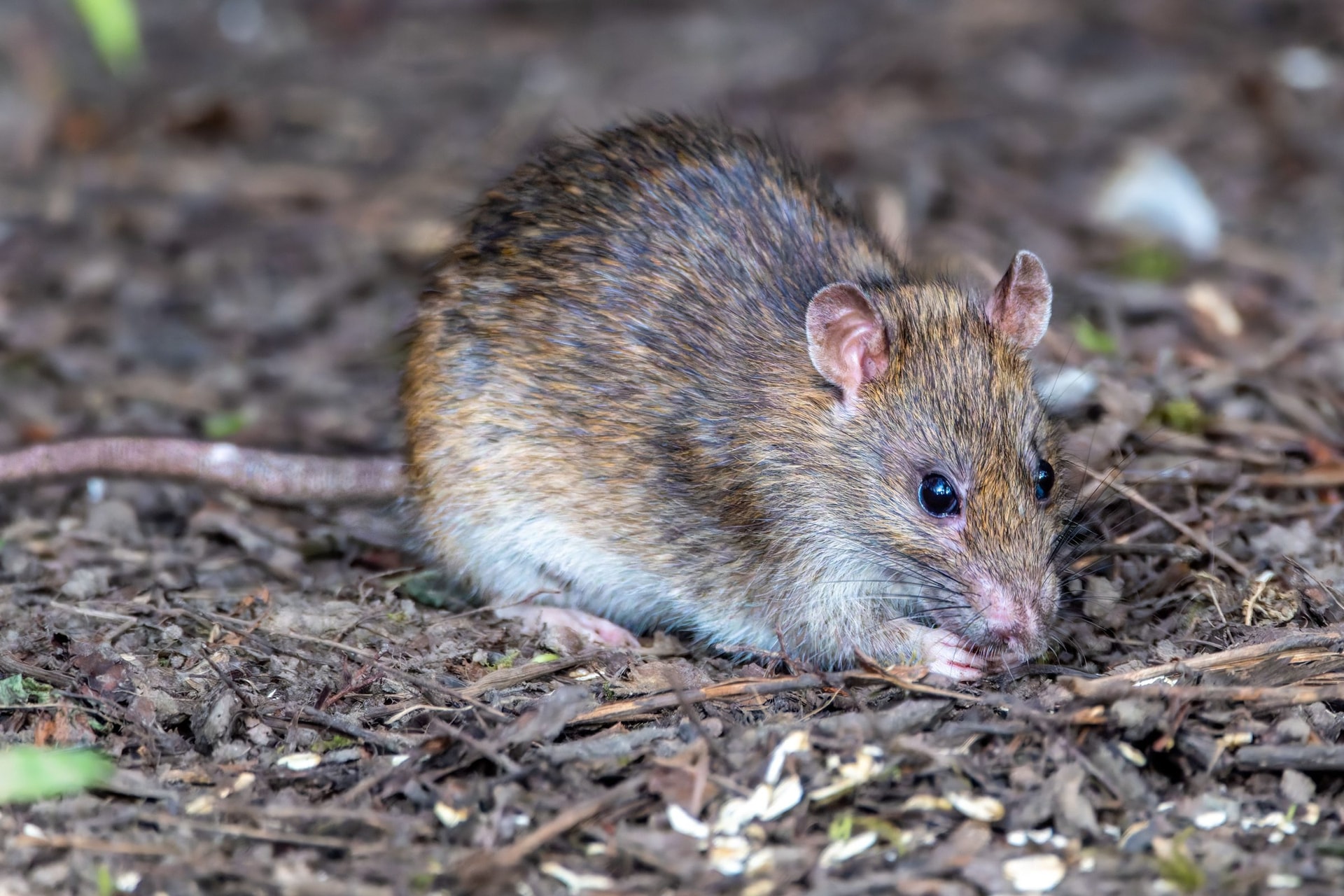
Mouse droppings are small; rat droppings are clearly bigger. Mice can get through surprisingly small gaps and tend to stay close to food in the kitchen. Rats are larger and heavier, and the ones that climb often live in roof spaces, false ceilings and thick climbers or trees next to the house.
Sounds help too. Light, quick scratching in a wall or kitchen unit is often mice. Heavier scurrying, thumps or gnawing in the roof or ceiling after dark points to rats. Either way, the steps below are the same.
Why they come indoors in the cooler months
When nights turn cooler, a warm, dry roof space or a cupboard full of food is attractive. Gardens add to it: fallen fruit under trees, open compost, bird seed, pet food left out overnight and piles of wood, tiles or boxes give rodents food and cover close to your walls.
Homes that stand empty over the winter are easy targets, because nobody hears the first signs. If you are away for weeks at a time, ask whoever checks the house to look for droppings and chewed packets.
What to do today
Start by making the home less useful to them. Traps or bait work far better once food and shelter are gone.
Food, bins and pet bowls
Move dry food such as rice, pasta, cereal and pet food into hard plastic, glass or metal tubs with tight lids. Wipe up crumbs, keep kitchen bins closed, and take rubbish out to a lidded outdoor bin every evening. Don’t leave pet food or water bowls out overnight.
Clear hiding places
Outside, pick up fallen fruit, cover the compost, lift wood and tile piles off the ground and away from the walls, and cut back climbers and branches that touch the roof. Inside, clear clutter from storerooms and the space under the stairs, and store things in sealed plastic boxes rather than cardboard.
Cleaning up droppings safely
Rodent droppings and urine can carry germs. The US Centers for Disease Control and Prevention (CDC) says never to sweep or vacuum them, because that can put germs into the air you breathe.
Follow the CDC method: open the windows first, put on rubber or plastic gloves, spray the droppings with a household disinfectant until very wet, leave it for 5 minutes (or as the label says), then wipe up with paper towels and put them in a covered bin. Mop or wipe the surrounding area with disinfectant, wash your gloved hands, then wash your hands with soap and warm water once the gloves are off.
Use one product as the label directs and don’t mix cleaning products: some combinations give off toxic gas.
Finding and sealing entry points
Walk around the house in daylight and look for gaps where pipes and cables come through the walls, around the holes drilled for AC pipes, under external doors, at loose vent covers and air bricks, under roof eaves and tiles, and around drain covers and broken manhole lids. Gnaw marks or smears next to a gap show it is in use.
- Seal small gaps around pipes and cables; a handyman can tell you which filler suits the wall.
- Fit fine metal mesh over vents and air bricks, so air still flows.
- Add a door sweep or brush strip to external doors that leave a gap at the bottom.
- Make sure drain covers and gully grates sit tight and are not broken.
- Trim trees and climbers back from the roof line.
A handyman can seal pipe gaps and fit vent mesh, and a carpenter can adjust or rehang a door that no longer closes tight. If a pest control company is treating the house, seal up after they have dealt with the animals inside, so none are trapped in a wall.
Traps, bait and safety
Snap traps set along walls, where droppings show the animals run, are a simple first step for a mouse or two. Put them where children and pets can’t reach, and check them every day.
Why loose poison is risky
Poison pellets scattered on the floor or in the garden can be eaten by children, dogs, cats and wildlife, including the birds and animals that eat poisoned rodents. If you use any rodent bait, use it only inside a lockable, tamper-resistant bait station and follow the label instructions exactly. If you have children or pets, or the problem is more than a mouse or two, leave baiting to a pest control company. Our pest control guide explains how professional treatments work and which questions to ask.
Why a rodent dying in a wall is a smell problem
A poisoned rat may die somewhere you can’t see, such as inside a wall, under a floor or in the roof space. The smell can last for days or weeks and you may not be able to reach the body. That is one more reason to block entry points, set traps where you can reach them, and let a pro plan any baiting inside the house.
When to call pest control
Book a pest control company when:
- You still find fresh droppings or hear noises after a week of clearing food and setting traps.
- There are droppings in kitchen cupboards, on worktops or near stored food.
- You hear them in several rooms, or in the roof or ceiling every night.
- You find chewed cables. Also call an electrician registered with the Department of Electrical and Mechanical Services (EMS) to check the wiring, because gnawed insulation is a fire risk.
- You have small children, pets or someone with a health condition at home and don’t want to handle traps or bait.
If you rent, tell your landlord in writing as soon as you notice the signs, with dated photos, and keep a copy. Who pays for pest control depends on your tenancy agreement, so check it before you book.
What your municipality does
Municipal health services deal with rodents in public areas such as streets, parks and sewers, and some also help at private homes. Inside your home is usually up to you. Here is what each city’s official pages say (read 25 October 2026):
- Larnaca: the town’s Health Department says its staff place rodent bait around the town every day and run campaigns against rodents. Contact its Hygiene Service about a problem near your home.
- Limassol: the Health Department (Greek) lists rodent-control campaigns among its services and publishes rodent-control instructions. You can email healthservices@limassol.org.cy.
- Nicosia: the Nicosia Municipality Health Service (Greek) offers spraying and baiting at private premises, and you request a visit through the Novoville app. For rodent control outside a home, the owner first buys the bait stations. Public spaces are covered at no extra cost.
- Paphos: the Paphos Municipality Health Service (Greek) runs campaigns placing rodent traps. Separately, the Paphos District Self-Government Organisation (ΕΟΑ) treats the public sewer network against cockroaches and rodents, and asks owners to clean and treat their own private sewer manholes at the same time.
If you live in a village or another municipality, ask your own municipality or community council.
Describe the job
A clear description helps a pest control company understand the job before they visit. Include:
- Your town or village and area.
- House or apartment, and which floor.
- What you saw or heard, and where: droppings, gnaw marks, noises in the roof or walls.
- How long it has been going on.
- Whether there are children or pets at home.
- Whether there is a garden, a roof space or a false ceiling.
- Anything you have already tried, such as traps or bait.
Posting a job on Ergo is free. Ergo is new, so we may not have a pro for your trade and area yet. If we do, we send your request to independent local pros whose trade and city match; they can contact you, and you agree the price and the work with them directly. If we don’t, we’ll tell you and won’t pass your request to anyone.
Need someone to take a look?
Sent to local pros whose trade and city match. No match yet? We'll tell you.
Checklist: keep them out all winter
Tick these off before and during the cold weeks:
- Dry food and pet food in sealed tubs
- Kitchen and outdoor bins closed every night
- No pet food left out overnight
- Fallen fruit picked up, compost covered
- Wood and tile piles off the ground and away from walls
- Branches and climbers cut back from the roof
- Gaps around pipes, cables and AC holes sealed
- Vents and air bricks meshed
- Door sweeps on external doors
- Drain covers and manhole lids tight
- Roof space and storeroom checked for droppings each month
Questions people ask
What should I do if I see a rat in my house?
Stay calm and keep children and pets away from it. Open an outside door so it can leave, then close off food, check for droppings and look for the gap it came in through. If you keep seeing signs after a week, call a pest control company.
Are rats in the house dangerous?
They can be. Rodent droppings and urine can carry germs, and the US CDC advises cleaning up with gloves and disinfectant, never sweeping or vacuuming. Rats also gnaw cables, which can be a fire risk.
Do mice come inside more in winter?
They look for warmth, shelter and food when nights cool down, so signs often show up in autumn and winter. Sealed food, closed bins and blocked gaps make your home less attractive.
What does a rat in the roof sound like?
Usually scurrying, scratching, thumping or gnawing in the ceiling or roof space, mostly in the evening and at night. Lighter, quicker scratching inside walls and kitchen units is more often mice.
How do I get rid of rats without poison?
Take away food and shelter, seal the entry points, and use snap traps set along walls where children and pets can’t reach them. If that doesn’t work within a week or two, ask a pest control company what they suggest.
Will my municipality deal with rats?
Municipalities deal with rodents in public areas, and some also help at private homes. In Nicosia you can request a visit through the Novoville app; Larnaca, Limassol and Paphos run their own rodent-control work. Check the section above, or ask your municipality or community council.
Can I use rat poison if I have pets?
Only inside a lockable, tamper-resistant bait station, placed where pets can’t reach it, and exactly as the label says. Loose pellets are a risk to dogs, cats and wildlife. If you are unsure, leave baiting to a pest control company.
Who pays for pest control in a rented home?
It depends on your tenancy agreement, so check it before you book anyone. A written note to the landlord, sent early with photos attached, keeps a record for both of you.
Sources
- US CDC: How to clean up after rodents (cdc.gov)
- Nicosia Municipality: Health Service pest and rodent control via Novoville (Greek, nicosia.org.cy)
- Limassol Municipality: Health Department (Greek, limassol.org.cy)
- Larnaka Municipality: Health Department (larnaka.org.cy)
- Paphos Municipality: Public health (Greek, pafos.org.cy)
- Paphos District Self-Government Organisation: pest control works for cockroaches and rodents (eoap.org.cy)
- Department of Electrical and Mechanical Services: certificates of competence and registration (mcw.gov.cy)
Do pest control for a living? Create a free profile; we review each sign-up.
Join as a proErgo introduces you to independent local professionals. You agree the price and pay them directly; we do not carry out or manage the work. This guide is general information, not medical or legal advice.