Pine processionary caterpillars build white silk nests in pine trees in Cyprus over winter and walk in lines on the ground in early spring. Their hairs cause skin, eye and allergic reactions, and are dangerous to dogs. Don’t touch them or their nests. Keep pets and children away, and have infested garden pines treated.
Key takeaways
- Caterpillars hatch from October in the mountains and November on the plains, and start building nests straight away (Forestry Department).
- Control period: end of October to mid-December (Forestry Department flyer, PIO 93/2008).
- Never touch, sweep, burn or spray nests yourself without protection; the hairs stay irritant.
- Dog exposure is an emergency: go to a vet straight away.
- The Forestry Department sprays forests and public areas; garden pines are the owner’s job.
What they are and how to recognise them
The pine caterpillar, πιτυοκάμπη in Greek, is the larva of a moth that feeds on pine needles. The Forestry Department’s flyer calls it the most severe insect problem in the island’s forests, and says the young caterpillars feed mainly on young pines.
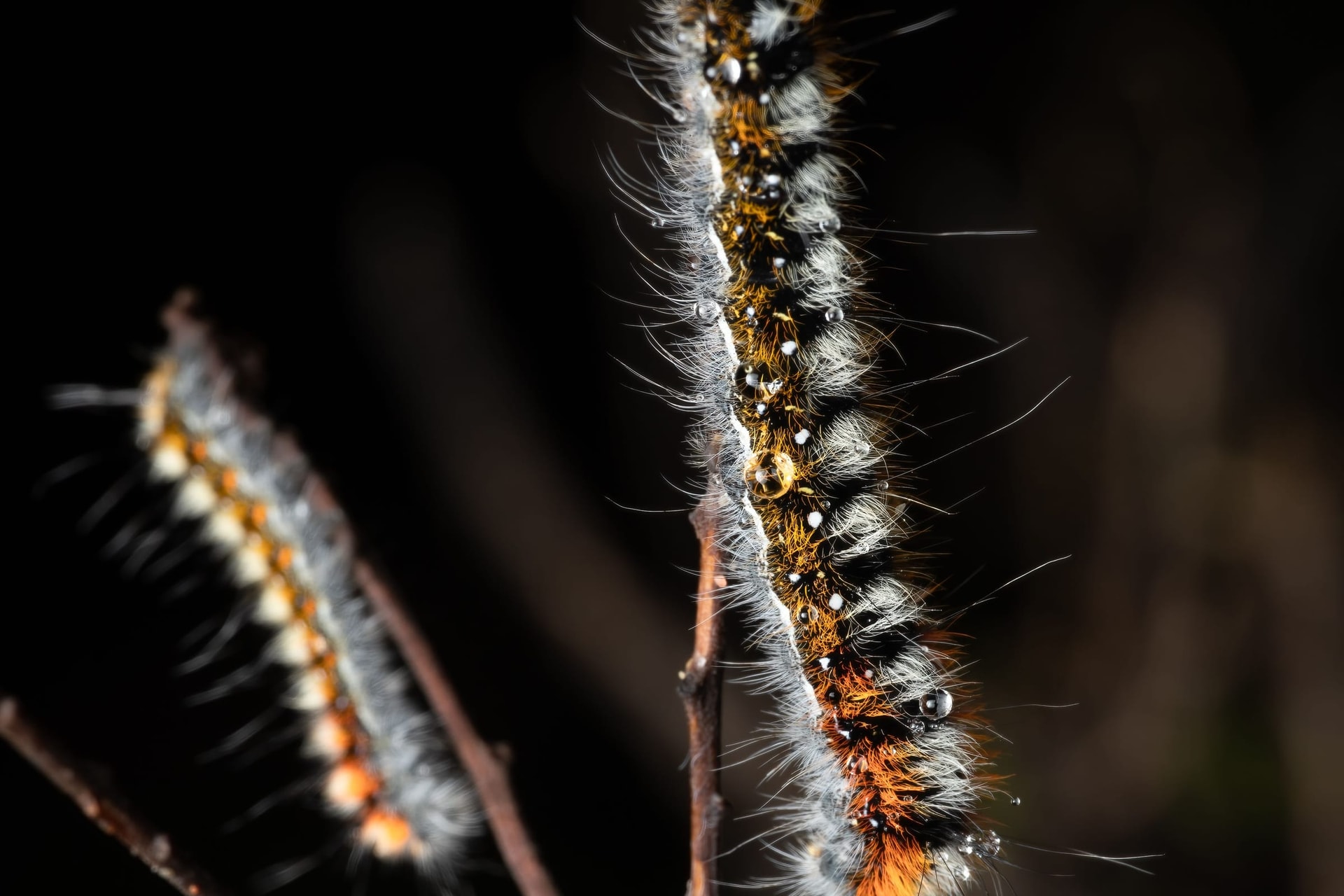
You usually notice the nests first: white or greyish tents of silk near the ends of the branches. The caterpillars are hairy, feed on the needles at night and hide in the nest by day. Later in the season they leave the tree and cross the ground head to tail in a line, which is where the name “processionary” comes from.
Pines grow in parks, school grounds, roadsides and gardens across the island, so this is not only a forest problem. If you have pines at home, or walk past them every day, it is worth knowing the signs.
The yearly cycle in Cyprus
Timing depends on altitude and on the weather in each area. This is the cycle the Forestry Department describes:
| When | What happens |
|---|---|
| September–October | Adult moths lay their eggs on pine needles. |
| October (mountains), November (plains) | Caterpillars hatch, start feeding on the needles at night and build the nests they hide in by day. |
| End of October to mid-December | The most suitable time to control them. |
| Winter | Caterpillars keep feeding and the nests grow. |
| By the end of March | Caterpillars leave the pines and go into the soil to pupate. |
| Summer | Adult moths come out, and lay eggs again in September–October. |
Use the dates as a guide and watch your own trees.
Why they’re dangerous
The danger is the hairs. The Forestry Department says contact with the caterpillar causes severe skin and allergic symptoms, and advises against even sitting under infested pines, because this may cause skin or eye irritation. Broken nests still carry hairs, so the risk doesn’t end when the caterpillars do.
To people
Anyone who touches a caterpillar or a nest, or brushes against hairs on clothing, garden furniture or the ground, can react. The flyer says anyone affected should see their doctor straight away. In its February 2026 announcement the Department again asked the public not to touch the caterpillars or their nests and to avoid staying under infested pines.
To dogs and other pets
If your dog sniffs, licks or picks up a caterpillar, treat it as a vet emergency. Hairs can irritate the mouth, tongue, eyes and airways, and some dogs have severe swelling or allergic reactions. Take the dog away from the area, don’t touch the caterpillars, and rinse the mouth gently with plenty of clean water without rubbing. Then go to a vet straight away. (Source: Geneva cantonal government vet advice.)
Don’t try home remedies or give medicines yourself. For other pets, keep them away from pines with nests and from lines of caterpillars, and call a vet if they have had contact.
What to do if you find a nest or a procession
Keep your distance. Most problems come from touching, so a few simple steps go a long way:
Keep people and pets back
Bring children and pets inside or move them away, and keep dogs on a lead near pines.
Don’t sit under the tree
The Forestry Department advises against sitting under infested pines. Move garden chairs, toys and washing lines away from them.
Mark the tree
Note which pine has nests, and roughly how many, so you can point them out later.
Take photos from a distance
A phone zoom is enough. Photos help whoever treats the tree to judge the job.
Arrange treatment
Have the pine treated, ideally between the end of October and mid-December. Outside that window, ask a specialist what can still be done.
What not to do: don’t touch, sweep, burn or hose a nest, and don’t cut branches with nests on them without protective equipment. Breaking a nest releases hairs, and burning one in a garden is a fire risk as well.
Treating garden pines
The Forestry Department advises the public to spray infested pines, especially in inhabited areas, with appropriate biological substances. Pines in your garden or on your land are yours to deal with.
Timing
The flyer puts the most suitable time for control at the end of October to the middle of December, while the caterpillars are young. By spring they are bigger, the nests are full and the hairs are everywhere, so a late treatment does far less.
Biological treatments
The Forestry Department uses biological substances that it describes as harmless to people, bees, plants and animals. Products for pests are regulated in Cyprus; see the Department of Agriculture’s biocidal products page and its Agrochemicals Section. Follow the label exactly, or have a pest control company do it.
Nest removal
Cutting out nests is a job for someone with protective clothing, eye protection and a safe way to bag the nests: a pest control company, or a gardener who does tree work and is equipped for it. Ask how they protect themselves and your garden before they start.
Trunk traps and collars
You will see collars and bags fixed around pine trunks to catch caterpillars on their way down. Ask your pest control company whether they suit your trees and how they should be emptied safely.
Public land, streets and forests
The flyer says the Forestry Department usually sprays from the air along tourist roads, in picnic sites and afforested areas, in community and municipal forests, and generally in areas that people visit often. The Forestry Department carries out aerial spraying in selected forest areas.
For pines on streets or in public parks, contact your municipality. For forest areas or general advice, contact the Forestry Department (moa.gov.cy/forest).
City by city
Pines are common in parks and suburbs in all four cities, so check the trees on your own daily routes and dog walks.
In Nicosia, look at the pines in Athalassa park and other urban parks and green strips where people walk dogs. Pest control in Nicosia.
In Paphos, pines grow near coastal villages and towards the edge of Akamas, on routes that many people walk with dogs. If your house stands empty over the winter, ask a key-holder to look at the garden pines in November. Pest control in Paphos.
In Larnaca, check pines in parks and along roadsides, and in the shared gardens of apartment blocks. Pest control in Larnaca.
In Limassol, homes in the foothill suburbs often border pine areas, and many gardens have their own pines. Pest control in Limassol.
Describe the job
A clear request helps a pest control company understand the job before they visit. Include:
- How many pines have nests, roughly how tall they are, and how many nests you can see.
- Whether the trees are near paths, a play area, a pool or a neighbour’s garden.
- Whether you have pets at home.
- How the trees can be reached: open garden, steep plot, close to walls or cables.
- Your town or village.
- Photos taken from a distance.
Posting a job on Ergo is free. Ergo is new, so we may not have a pro for your trade and area yet. If we do, we send your request to independent local pros whose trade and city match; they can contact you, and you agree the price and the work with them directly. If we don’t, we’ll tell you and won’t pass your request to anyone.
Need someone to take a look?
Sent to local pros whose trade and city match. No match yet? We'll tell you.
Pine caterpillar checklist
Through the season:
- October–December: inspect garden pines for new nests
- End of October to mid-December: have infested pines treated
- Winter: keep children and pets from playing under infested pines
- January–March: watch paths and lawns for processions
- Dog walks: lead on near pines, and go to a vet at once after any contact
- Street or park pines: tell your municipality
Questions people ask
Are processionary caterpillars dangerous to humans?
Yes, because of their hairs. According to the Forestry Department, touching them leads to severe skin and allergic reactions, and the skin or eyes can be irritated just by spending time under an infested pine. Keep your hands off caterpillars and nests, and get medical help quickly if a rash or eye irritation starts.
What should I do if my dog touches a processionary caterpillar?
Treat it as a vet emergency and follow the steps in the dogs section above: move the dog away, keep your own hands off the caterpillars, rinse its mouth gently with clean water, and get to a vet at once. Leave any treatment to the vet.
When do processionary caterpillars appear in Cyprus?
From autumn to spring. Eggs are laid in September and October, hatching follows in the mountains first and then on the plains, and the caterpillars feed through the winter before going into the soil by the end of March. The yearly cycle table above has the month-by-month detail from the Forestry Department.
How do I get rid of a processionary caterpillar nest in my garden?
Have the tree treated between the end of October and mid-December, when the Forestry Department says control should be done. The Department advises appropriate biological substances. Removing nests is a job for someone with protective equipment, such as a pest control company.
Who removes processionary caterpillars on public land in Cyprus?
The Forestry Department sprays tourist roads, picnic sites, afforested areas and community and municipal forests. Street trees and park pines are a matter for your local municipality.
Can I burn or cut down the nest myself?
No. Breaking or burning a nest releases the irritating hairs and is a fire risk. Leave removal to someone with protective equipment.
Do processionary caterpillars damage pine trees?
They eat the needles. The Forestry Department says the defoliation “affects negatively the aesthetic appearance of isolated trees or even extensive areas of pine forest.”
Sources
- Forestry Department: The pine caterpillar (flyer, PIO 93/2008, moa.gov.cy)
- Department of Forests: announcement of 20 February 2026 (Greek, gov.cy)
- Republic and Canton of Geneva: processionary caterpillars, precautions for dogs and vet emergencies (French, ge.ch)
- Department of Agriculture: biocidal products, crew licensing procedure (moa.gov.cy)
- Department of Agriculture: Agrochemicals and Feedingstuffs Section (moa.gov.cy)
Remove pine caterpillar nests for a living? Create a free profile; we review each sign-up.
Join as a proErgo introduces you to independent local professionals. You agree the price and pay them directly; we do not carry out or manage the work. This guide is general information, not medical or legal advice.